


 Banking
 Insurance
 Credit Unions


 Professional Services
 Consulting & Advisory
 Legacy Migration


 Insights
 Whitepapers
 FAQs
FAQs
 Brochures
 E-Books
 Glossary
 Case Studies
 Events & News
 About Us
 Information Security
 FCI Cares
 Leadership
 Careers
 Partner Program
 Current Openings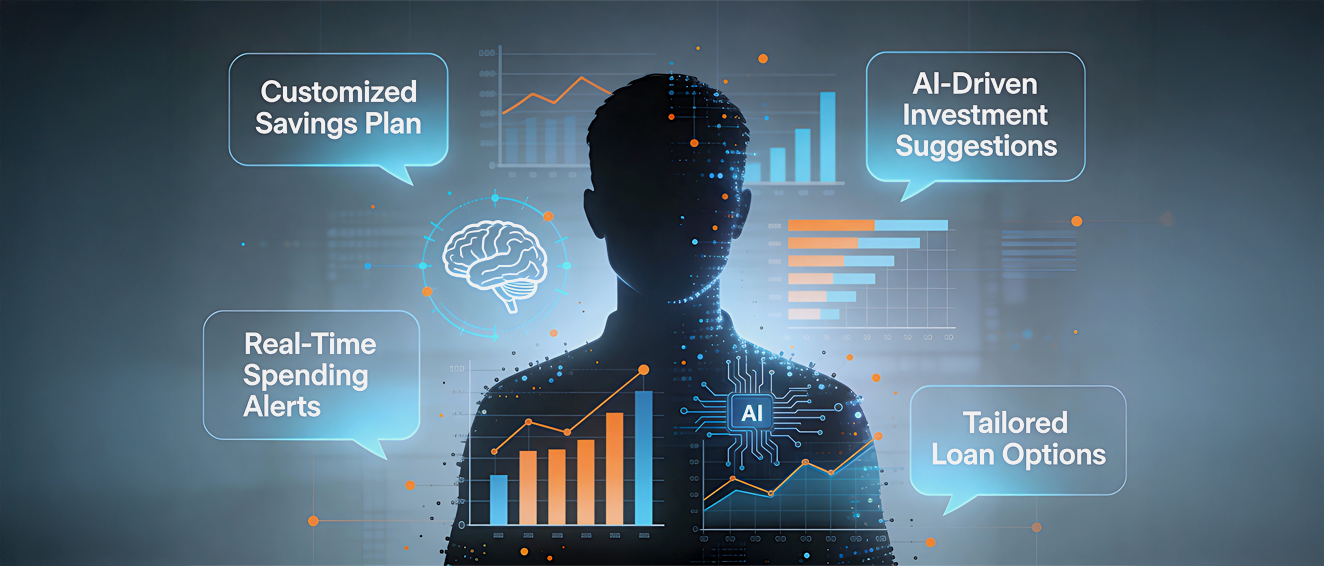

TL;DR
Engagement Banking moves banks from transactional service to relationship-led growth.
It uses customer intelligence, real-time personalization, and seamless omnichannel engagement to build trust, loyalty, and long-term value.
Unlike customer experience, which optimizes individual interactions, engagement strengthens the relationship across the lifecycle.
Banks that execute it well see higher retention, deeper cross-sell, lower churn, and stronger advocacy. The primary constraint is not technology, but organizational mindset and operating model.
Why Engagement Banking is Essential Today
Banking has entered a decisive new era shaped not just by technology, but by emotion, context, and connection. Customers no longer stay loyal because of convenience alone; they stay loyal when they feel known, understood, and valued.
That’s where Engagement Banking comes in.
Traditional digital transformation delivered efficiency. Engagement banking focuses on intimacy, building emotional and functional relationships through every channel. It goes beyond “doing digital” to “being human at scale.”
Global data reinforces this shift. A recent CX benchmark study found that banks with high customer engagement scores achieve 37% higher retention rates, 23% more cross-sell opportunities, and 32% stronger brand trust than those relying solely on digital service improvements.
In a landscape where neobanks and fintechs are redefining convenience, established institutions must now compete on relevance and relationship quality.
Engagement banking offers that edge, merging data, design, and empathy to create sustained loyalty and measurable growth.
What is Engagement Banking? A Strategic Definition
Engagement banking is the philosophy of designing banking around the customer’s life, using continuous, helpful interactions to stay relevant beyond transactions.
Where traditional banking focuses on products and services, engagement banking focuses on deeply understanding customers and meeting them where they are with what they need, when they need it. It is not a platform or product, but a philosophy that places the customer relationship at the core of every process.
Traditional digital banking automated transactions. Engagement banking transforms those transactions into two-way conversations that deepen trust. It is a strategic shift from “banking for customers” to “banking with customers.”
Key dimensions include:
- Customer-Centric Design: Every service and channel is designed around human needs, not system constraints.
- Unified Experience Layer: Breaking down silos so interactions across mobile, web, branch, and call centers feel connected and consistent.
- Proactive Value Delivery: Anticipating needs instead of reacting to them.
- Continuous Innovation: Treating engagement as a living capability, not a one-time project.
In essence, engagement banking elevates customer engagement from a marketing metric to a business imperative that reshapes the entire operating model.
The Pillars of Engagement Banking
To bring this vision to life, banks must strengthen five critical pillars that define modern engagement excellence.
- Personalization and Data Intelligence
True personalization is not just using a name; it is understanding intent. With the right data intelligence, banks can anticipate needs before customers articulate them.
Examples include:
- Offering goal-based savings suggestions when income inflows increase
- Detecting upcoming financial stress and recommending preventive solutions
- Delivering insights aligned with life stages, such as new parenthood or retirement
The future of banking personalization lies in real-time orchestration, using behavioral, transactional, and emotional signals to deliver contextually relevant interactions that feel both intelligent and human.
- Seamless Omnichannel Experiences
Customers now move fluidly between digital and human channels.
An engagement banking model ensures these transitions are invisible. Whether starting a mortgage application on a mobile app and completing it in branch, or seeking help online after hours, every interaction feels unified.
Consistency across channels builds confidence. More importantly, it eliminates friction, the enemy of customer engagement.
- Proactive Interactions and Predictive Guidance
Modern engagement is not reactive; it is anticipatory.
Banks that leverage predictive analytics can nudge customers toward better financial outcomes, such as reminding them to invest idle funds or automatically top up savings.
This proactive approach transforms the bank’s role from service provider to trusted advisor. It creates emotional engagement by showing customers that the bank cares about their success.
- Trust and Transparent Data Usage
Trust is the emotional backbone of engagement banking. Transparency in how data is collected, used, and secured reassures customers that personalization is not manipulation; it is partnership.
Banks leading in engagement explicitly communicate their data ethics and empower customers with control over preferences. This clarity turns trust into competitive differentiation.
- Continuous Improvement and Feedback Loops
Engagement excellence is iterative. Collecting feedback from every journey and using it to refine products, content, and delivery keeps institutions relevant.
An engagement-first culture values listening as much as innovation.
Customer Engagement Trends Shaping the Future of Banking
The evolution of customer engagement in banking is accelerating. Several interconnected trends are defining the future of experience-led growth.
- Data-Driven Relationships
Next-generation banks treat data as an engagement asset, not a reporting tool.
Advanced analytics enable real-time insights, allowing institutions to connect lifestyle signals with financial intent and create more meaningful engagement moments.
- AI and Machine Learning
AI personalizes experiences at scale. It helps banks move from reactive recommendations to predictive empathy, understanding what a customer feels and needs, not just what they have done.
Machine learning enables customer engagement that adapts dynamically and improves with every interaction.
- Conversational and Voice Banking
Chatbots and voice assistants now handle routine queries, freeing human teams to focus on value-driven engagement.
These channels also create a sense of companionship, keeping engagement conversational rather than transactional.
- Emotional Intelligence in Digital Journeys
A rising frontier is emotional engagement, designing digital interactions that feel empathetic.
Banks that embed emotional cues in language, tone, and timing enhance satisfaction and loyalty without physical contact.
- Real-Time, Contextual Touchpoints
Banks are moving toward event-based engagement. From notifying a customer about an investment opportunity when markets shift to congratulating them on financial milestones, timing and relevance drive emotional impact.
- Open Banking Ecosystems
Partnerships with fintechs and third-party apps extend engagement beyond traditional boundaries.
By integrating external services such as budgeting tools, lifestyle offers, and ESG investments, banks can create ecosystem engagement that supports holistic customer lifestyles.
Customer Engagement vs. Customer Experience: Why the Distinction Matters
Many institutions conflate customer experience with customer engagement, but the distinction is critical.
- Customer Experience measures how well a bank executes a single interaction, such as app usability or contact center satisfaction.
- Customer Engagement measures relationship strength over time, including how customers feel about the brand between transactions.
A smooth digital experience builds satisfaction. Ongoing engagement builds trust and advocacy.
In short, experience earns a moment; engagement earns a relationship.
Leading banks fuse both dimensions, aligning experience quality with engagement depth to drive long-term value.
Challenges in Delivering Engagement Banking
Even visionary strategies face practical barriers. Implementing engagement banking requires transformation at multiple levels:
- Legacy Systems and Siloed Data: Fragmented architectures prevent unified visibility across channels.
- Privacy and Compliance: Customers demand personalization with protection, requiring transparent governance.
- ROI Measurement: Engagement value is not always tangible; new metrics such as sentiment, advocacy, and lifetime value are essential.
- Cultural Resistance: Shifting from product-centric to engagement-centric thinking demands leadership alignment and continuous education.
The greatest obstacle is not technology; it is mindset. Engagement banking succeeds when everyone, from frontline teams to executives, thinks in terms of relationships rather than transactions.
Unique Insight: Engagement Around Life Events
Most engagement models focus on journeys; few focus on moments.
Yet life events, such as getting married, having children, or changing jobs, are where financial and emotional needs intersect most deeply.
Banks that proactively recognize these milestones can offer contextual support:
- Mortgage guidance during home buying
- Savings coaching when expecting a child
- Wealth advice near retirement transitions
This event-based engagement builds emotional affinity. It signals that the bank is not merely observing, but understanding and supporting the customer’s journey.
That emotional resonance is the hallmark of next-generation customer engagement.
How Banks Can Implement Engagement Banking Successfully
Execution determines success. Here is a practical five-step framework to turn engagement intent into measurable outcomes:
- Build a Unified Customer Data Layer
Integrate customer data across core, CRM, and digital systems to form a single, 360-degree view. This enables accurate insights, contextual offers, and seamless CX handoffs.
- Prioritize High-Impact Journeys
Start with moments that influence loyalty, such as onboarding, savings goal creation, credit upgrades, and complaint resolution.
Design these journeys around outcomes, not internal workflows.
- Blend Real-Time Intelligence with Human Touch
Automation can predict needs, but empathy fulfills them.
Use AI for scalability and analytics for precision, while empowering relationship managers to deliver high-emotion engagements when it matters most.
- Redefine Engagement KPIs
Move beyond operational metrics.
Adopt experience-centric KPIs such as:
- Engagement frequency per customer
- Relationship depth index
- Emotional sentiment score
- Advocacy and referral rate
These KPIs align engagement success with long-term brand growth.
- EstablishContinuous Feedback Loops
Create a voice-of-the-customer system that collects feedback across all touchpoints.
Use analytics to identify friction points and opportunities for delight. The more a bank listens, the more effectively it can adapt and evolve.
The CX Payoff: Why Engagement Banking Drives Measurable Returns
For executives focused on customer experience, engagement banking is more than a buzzword; it is a measurable growth driver.
Engaged customers are:
- Four times more likely to purchase additional products
- Six times more likely to refer friends or family
- Five times more resistant to competitive offers
Moreover, institutions that invest in engagement capabilities report up to a 25 percent reduction in churn and an 18 percent increase in lifetime value per customer segment.
The ROI equation is clear. Engagement translates into sustainable growth, reduced acquisition costs, and stronger emotional equity.
Positioning for the Future: The Next CX Frontier
As technology continues to evolve, engagement will define the future of customer strategy in banking.
Institutions that master customer engagement will not only deliver superior experiences, but also unlock new forms of trust and advocacy.
The banks that lead tomorrow will not just offer products; they will orchestrate relationships, weaving finance seamlessly into the fabric of their customers’ lives.
Why VARTA Defines the Engagement Banking Standard
As banks shift from experience optimization to relationship orchestration, success depends on having an engagement platform built for intelligence, scale, and speed.
VARTA is purpose-built for engagement banking, not retrofitted from legacy CX or campaign management tools. It enables banks to operationalize engagement as a core capability by unifying data, decisioning, and orchestration into a single engagement layer.
Unlike fragmented stacks that require heavy integration and manual coordination, VARTA provides a unified foundation that connects customer intelligence with real-time action across channels. This allows banks to move from static journeys to adaptive, life-aware engagement.
VARTA’s strength lies in three critical areas:
Real-Time Engagement Orchestration
VARTA continuously analyzes behavioral, transactional, and contextual signals to determine the next best action for each customer. Engagement is triggered by real-world events, not predefined workflows, ensuring relevance at every touchpoint.
Life-Centric Customer Intelligence
Rather than treating customers as product holders, VARTA models customers around life stages, intent, and financial context. This enables banks to engage meaningfully during high-impact moments such as income changes, major purchases, or financial stress.
Enterprise-Grade Trust and Governance
VARTA is designed to operate within the regulatory and security realities of banking. Transparent data usage, consent management, and explainable decisioning ensure personalization is delivered with trust, not risk.
Most importantly, VARTA aligns engagement strategy with execution. It bridges the gap between insight and action, allowing marketing, CX, product, and frontline teams to operate from a shared engagement intelligence layer.
Banks using VARTA improve interactions by institutionalizing engagement as a growth engine, turning relevance into measurable competitive advantage.
Conclusion
The era of passive service is over.
Engagement Banking represents a paradigm shift from transacting to connecting, from serving to partnering. By aligning data, empathy, and design, banks can transform every interaction into a moment of relevance, trust, and value. Those who invest in engagement today will not just retain customers; they will earn lifelong advocates.
FAQs
What is Engagement Banking in practical terms
How is Engagement Banking different from traditional digital banking
Why do banks struggle to deliver engagement today
What business outcomes does Engagement Banking actually drive
Where should banks start when adopting Engagement Banking